Article
Smart Glasses Don't Need a Camera. They Need Your Eyes
Augmented reality could work with the wearer's natural vision, using a signal the body already sends.
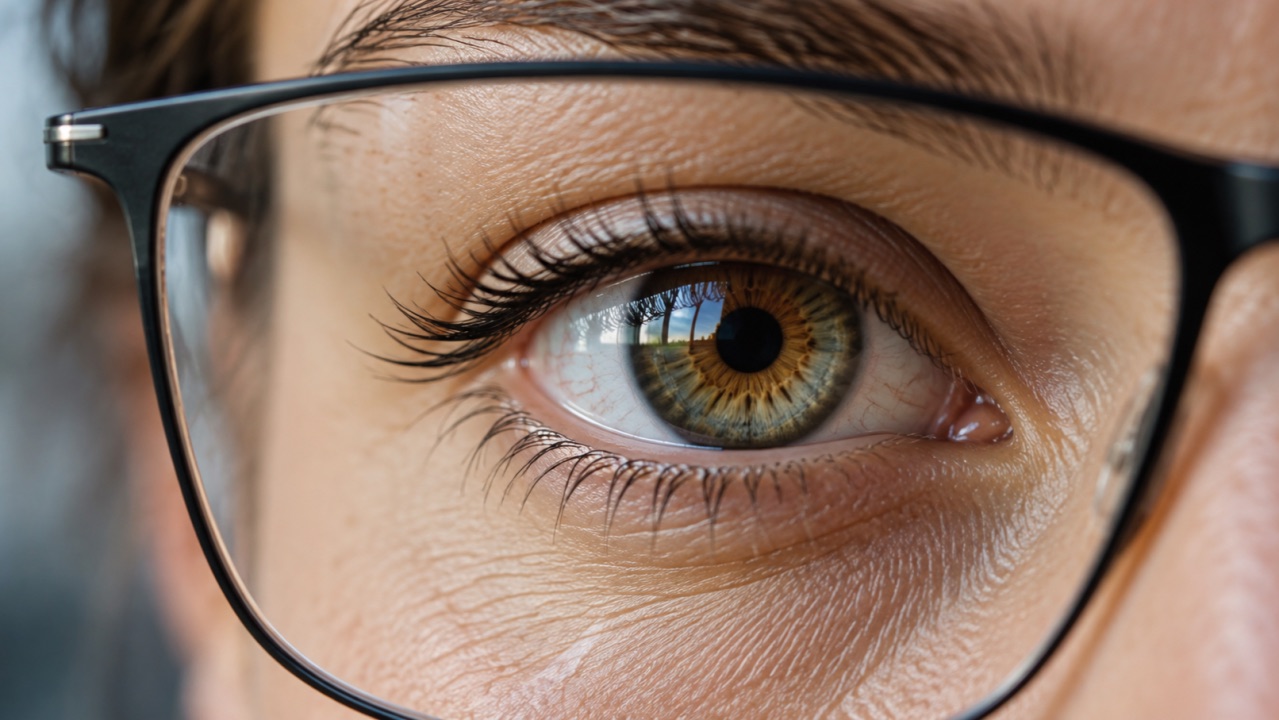
Specialist Marcus Hale thinks his job will be simple today.
“Just walk the course,” his sergeant says. “Shoot targets as they pop up.”
Sounds easy, right? Not exactly.
Hale must run this course in a pair of military goggles. The Army spent years trying to get them right. The goggles put virtual labels on the real world before him, the way a video game does. Arrows point to targets. Dots show teammates. A line marks the edge of the course.
A camera on the front of the goggles films the ground and tracks where Hale looks. Without it, the labels would show up in the wrong place.
Everything is going fine at first for Hale.
But then a few steps in, the hill in front of him … moves.
What the heck? Hale thinks.
In reality the hill never moved.
The labels did. Why? They can’t keep up with Hale’s head. Whenever he turns toward the next target, they turn too. Except they do it a moment later. As a result the whole world seems to slide, starting with that hill.
“Ugh.”
Hale’s got bigger problems. All that sliding makes him sick to his stomach. Worse, with both hands on his rifle, he can’t loosen the strap. He can’t dim the screen either or wipe the sweat under it.
“Target incoming,” says his sergeant. “You got three seconds to hit it.”
Hale yanks the goggles off. The hill holds still. The target pops up out of the grass. He nails it before the goggles could have shown it to him.
When he gets to the end of the course his superior officer demands to know why his goggles are around his neck instead of on his head.
“I needed my eyes, sir.”
This story is hypothetical, but the problem it describes is real.
The U.S. Army spent years on augmented-reality headgear for soldiers like Hale. In June, the Government Accountability Office reported that the program still has nothing in the field: “For example, the Army’s Integrated Visual Augmentation program—intended to provide augmented-reality headgear for soldiers for close combat—has yet to deliver operational capability after three different acquisition efforts over the last 8 years. Though the program produced nearly 10,000 units of the first two versions, they do not meet soldiers’ needs and will go into storage, with some potentially used for testing, rather than into the field.”
This is not intended to criticize the men and women involved. These are hard problems. But what if the solution is staring us in the face? Literally.
Consider what the goggles were trying to do in our story: see the world with a camera, then show soldiers like Hale what they’re looking at. His eyes already do both of those jobs. That means everything strapped to his face was a copy of a sensor he was born with.
Worse, the copy was slow. And ineffective.
The industry’s biggest names are still working on that copy. I’ve spent years on the opposite bet. After all, the one sensor that already knows what you’re looking at is your eye.
More on the Head
This month, Road to VR reported that Sony has agreed to transfer 419 patents to Meta. The patents date from 2010 to 2022 and cover headsets, smart glasses, and the software that operates them. One idea shows up again and again, the same one behind Hale’s goggles: whatever the glasses need to know, the answer is to put more on your head
The consumer side tells a similar story. EssilorLuxottica, the company behind Ray-Ban Meta and Oakley Meta, reported sales above 7 million pairs in 2025. That’s a lot of money and cameras to do what the eye already does.
Now for the $799 Meta Ray-Ban Display. It puts microphones, speakers, cameras and a full-color display into one frame. According to Meta, you can get six hours of mixed use from it. That’s a lot of money for just six hours. Plus, every camera, chip and battery you add to your glasses makes them heavier and drains them faster.
And after all that, the camera on your head still sees the whole scene and has to guess which part of it you’re looking at. Surely we can do better.
What the Eye Already Reports
Let’s talk about the human eye. It doesn’t just see. It reports.
Here’s how. Your retina sends a signal up the optic nerve to the visual cortex. That signal tells the brain what you’re looking at. You can think of the optic nerve as a cable already broadcasting the picture.
As for Hale’s goggles? They ignored the cable and filmed the hill.
I may not have Meta or Sony’s money and connections behind me, but I am committed to doing better by Hale and other soldiers. My approach has just three parts. Two already exist.
Part one: a sensor. An EEG sensor reads the activity in the part of the brain handling sight. That hardware is on sale now.
Part two: a display. AR glasses or a holographic display show an image to the wearer. Those exist too.
Part three: the software between them.
This is where I come in. My approach takes the eye’s own signal and turns it into what the display needs. This way a system would know what you’re looking at. Why? Because your eye told it.
No camera required. No eye tracker either.
Here’s what that means in plain terms. The eye replaces the camera. Right now, any device that wants to know what you’re looking at must film the world and guess. My software would let it ask your eye instead.
For a soldier like Hale, that would mean no camera on his face and no guessing about where he’s looking. The display would put the information exactly where his eyes already are. The same goes for a pilot in a cockpit or a surgeon over a patient. Anywhere hands are busy and eyes are needed elsewhere, the naked eye becomes the sensor.
Where Things Stand
I hold nine U.S. patents covering that software. Anyone can look them up. Developing the software comes next.
Turning brain signals into detailed pictures is still a research problem. Meta’s own lab tried it with a lab scanner and flubbed the fine details. My patents don’t claim to read your mind. They offer a way to read what the eye already reports. Now let me tell you how this came about.
The Gap in My Own Sight
A few years back, a tumor pressing on my own optic nerves took away part of my field of vision. What surprised me came afterward. My brain actually corrected for what it could not see. It was working from the same signal it had always used. Amazingly, that signal held enough data to restore the picture.
It dawned on me: if the brain can do that, the signal must contain the picture. And if that’s true, we don’t need a camera to know what someone is looking at. That’s the insight behind the patents and my vision.
Partners Wanted
Hale took the goggles off because they got in the way of his eyes. The next pair shouldn’t. Again, the patents are done. The software comes next.
I’m seeking the right partner to develop it with, preferably a company that already makes EEG headsets or AR displays, has a place to test, and wants to fund the work from patents to a working system.
If this sounds like you, contact me. Let’s make sure the next soldier like Hale never has to choose between his goggles and his eyes.
Also published on LinkedIn.